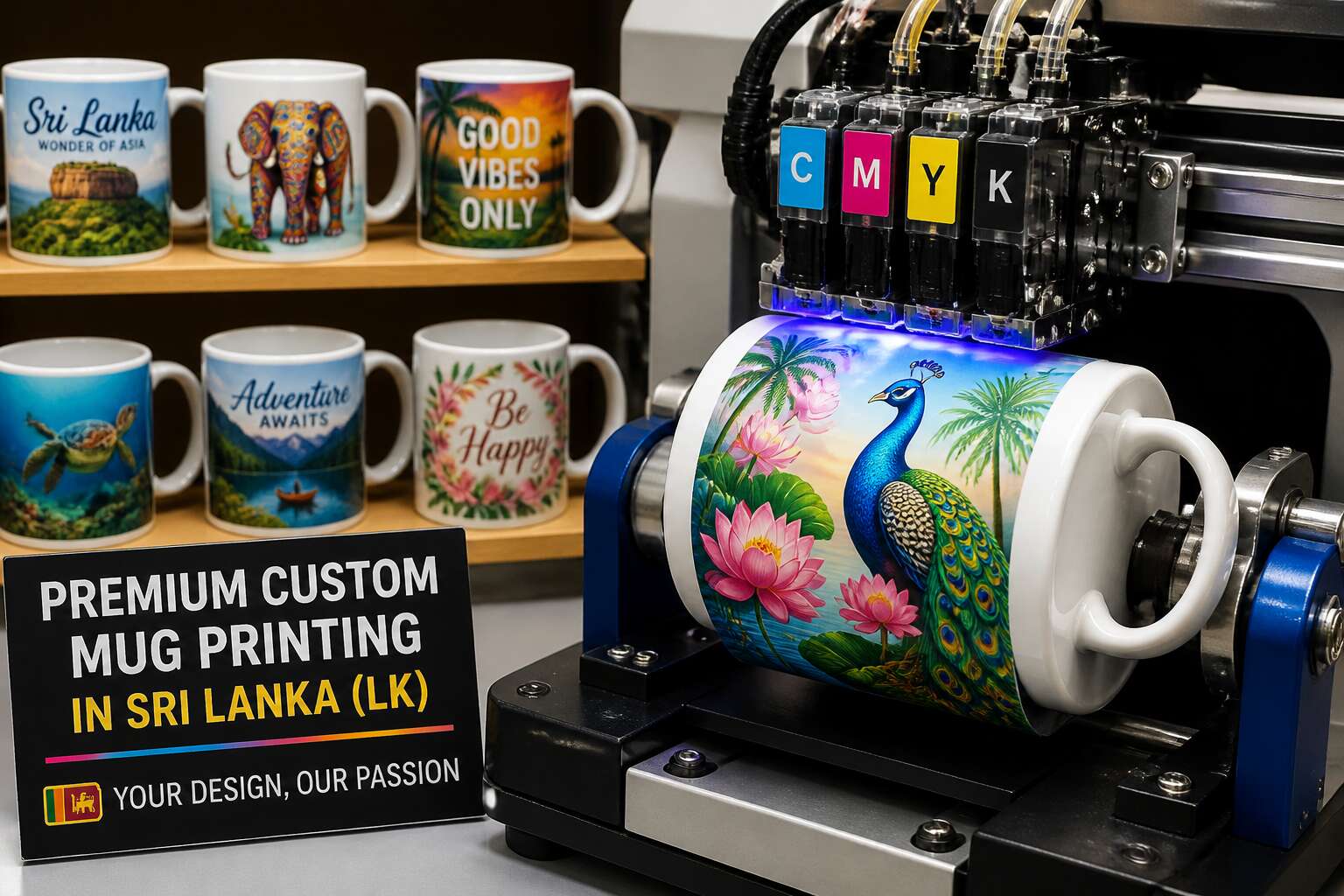
The Rising Popularity of Custom Mugs
Why Personalized Mugs Make Great Gifts
Custom mugs now occupy a curious space in daily rituals. The morning coffee sip becomes a quiet moment of identity. For many South Africans, the mug on their desk says more about their aspirations than their job title ever will. That shift is why mug printing lk has grown into a trusted choice for personalised gifting.
Personalised mugs carry an intimacy that generic presents lack. A name, a date, a phrase that matters only to two people. They are not expensive, yet they feel considered. That emotional weight drives their popularity at birthdays, weddings, and housewarmings.
Consider what makes them work:
- The mug is used daily, so the gesture repeats itself every morning.
- The design can match the recipient’s humour, profession, or memory.
- The cost stays low while the perceived value stays high.
Gifting a personalised mug is a small act of knowing someone. With mug printing lk, even a single cup can capture a shared memory. It says you paid attention. That quality is rare in an age of hurried online orders.
Corporate Branding and Promotional Merchandise
Corporate branding extends far beyond logos on letterheads. The humble coffee mug has become one of the most reliable promotional merchandise items for businesses across Sri Lanka. Every time an employee or client sips from a branded mug, the company name enters their daily routine without feeling forced or intrusive.
Mug printing lk gives businesses a practical way to keep their brand visible throughout the working day. Unlike flyers that get discarded or digital ads that get scrolled past, a ceramic mug sits on a desk for years. It survives moves, office reorganisations, and countless dishwasher cycles.
Companies that order branded mugs in bulk gain several advantages:
- Cost per unit drops significantly with larger order volumes
- Mugs work equally well for internal teams and external clients
- The practical nature means recipients actually use them rather than storing them away
For trade shows, client appreciation gestures, or staff recognition programmes, mug printing lk provides a durable option that keeps working long after the event concludes. A well-designed mug reflects company values with every sip, turning a simple beverage break into a subtle brand reminder that costs pennies per impression.
Decorating Trends for Coffee Lovers
A recent survey indicates that 7 out of 10 coffee lovers choose their mug based on visual appeal before considering heat retention. In South Africa, this preference has pushed custom mug designs far beyond standard corporate logos. Coffee enthusiasts now express personal style through their mugs. mug printing lk captures this shift by offering decorating techniques that suit every taste.
The leading trends focus on texture and interaction. For example:
1. Hand poured speckled glazes that create a tactile, stone-like surface
2. Thermal reactive coatings that change colour as the mug heats up
3. Minimalist line art with gold or copper rim details
These approaches add depth to the morning brew. The speckles hide water spots. The thermal shift creates a small surprise. The metallic rims catch light on video calls. Each feature turns an ordinary vessel into a deliberate choice, one that coffee lovers across South Africa now count as essential.
Eco-Friendly Reusables
South African landfills receive millions of discarded paper cups every year. That waste has prompted a steady shift in consumer behaviour, one that local manufacturers and designers have been quick to serve. The reusable mug is no longer a niche accessory. It is a daily companion for commuters, hikers, and office workers alike.
This is where mug printing lk earns its keep. A customised, durable ceramic or bamboo vessel encourages repeat use. When your name or a favourite phrase is fired into the glaze, you are less likely to leave it behind at the cafe counter. The psychology is simple: ownership increases attachment.
Durability matters more than aesthetics when you carry a cup in a backpack. A well printed mug should survive hundreds of dishwasher cycles without fading. Modern dye sublimation and ceramic coating processes offer that resilience. For the eco conscious buyer, the choice of substrate is just as important as the artwork.
Here is what practical consumers look for in a custom reusable:
1. Bulk pricing for households or small teams that want to ditch disposables together
2. Lids that seal properly to prevent car interior spills
3. Printed sizing guides or measurement marks for home baristas
The economics make sense too. A single reusable mug used twice a week replaces over one hundred disposable cups per year. For the price of a monthly cappuccino habit, you own a permanent, personalised solution. Mug printing lk provides the platform to turn that practical decision into a statement of intent, without the plastic aftertaste.
Different Mug Printing Techniques Explained
Dye Sublimation: The Standard for Full-Color Wraps
Every full-color mug wrap you’ve ever admired owes its permanence to dye sublimation. For anyone exploring mug printing lk, this technique operates on a simple premise.
Solid dye particles vaporize under intense heat and penetrate the mug’s polymer coating. When the temperature drops, the design sets permanently. That fusion is why sublimated mugs survive dishwasher cycles without fading, and why colors stretch uninterrupted from handle to handle. No other method delivers that level of seamless integration.
Direct UV Printing for Flat and Curved Surfaces
Direct UV printing has shifted the paradigm for mug decorators who work outside the confines of a full wrap. While sublimation requires a polymer coating and high heat, UV printing works with a different principle entirely. The equipment deposits liquid ink onto the substrate and then cures it instantly with ultraviolet light. This process allows the ink to sit on top of the material rather than soaking into it, which opens up a realm of possibilities that were previously locked behind thermal processes.
The practical upshot for those seeking durable branding is that UV technology handles more than just cylindrical surfaces. It is the go-to method for printing on flat ceramic coasters, glass tumblers, and even contoured shapes that a heat press would struggle to accommodate. This versatility is vital for businesses that want a consistent look across a range of products without swapping machinery. For the South African market, particularly for corporate gifts and small batch runs, the ability to produce short orders without setup fees is a considerable advantage.
– Textured finishes: The ink can be built up to create a tactile feel, adding a premium touch to a standard mug.
– Color fidelity on dark surfaces: A white ink underbase is applied first, ensuring that designs remain vivid on black or navy ceramics.
– Resistance to scuffs: Cured ink is highly durable against the friction of stacking and handling, though it is not always fully dishwasher safe, so care instructions are necessary.
This method offers precision and a thick, ink-like texture that contrasts with the “no-feel” finish of sublimation. For mug printing lk, understanding this distinction is key. You are not producing a dye that fuses with the polymer; you are painting a layer that adheres to the existing glaze. It is an ideal solution for detailed logos with high contrast, and it provides an economic threshold for orders that are too large for a single home printer but too small for industrial rotaries. The lack of a transfer paper step also reduces waste, a factor that businesses prioritizing sustainability will appreciate.
Pad Printing for Simple Designs
Pad printing is an alternative technique that serves a clear niche. It uses a silicone pad to lift ink from an etched plate and press it onto the mug’s surface. This method favors simple designs: a single logo, a name, a small motif. It does not wrap around the cylinder or fuse with the glaze. Instead, it deposits a thin, durable ink layer that resists the friction of daily handling.
For corporate runs that need hundreds of identical mugs with a monochrome mark, pad printing offers a pragmatic, low-cost route. The process is mechanical and exact, repeating the same gesture without variation. That repetition creates uniformity clients find reassuring. When you evaluate mug printing lk, this method provides a dependable baseline for clean, uncomplicated branding. Typical applications include:
- Corporate identifiers on mug handles
- Creation year or edition numbers
- Minimalist symbols or icons
Heat Transfer Vinyl and Its Downsides
Heat transfer vinyl takes a different approach, one that seems simple at first but reveals limits under daily use. The process starts with a vinyl sheet. A cutting machine traces your design, you remove the excess, and heat presses the remaining film onto the mug. It works quickly for a single prototype or a short run of event mugs.
The material never fuses with the ceramic glaze. Instead, it bonds to the surface as a distinct layer. You can feel the edge of the design. That raised edge catches dishcloths, collects coffee residue, and eventually lifts after repeated washing. The adhesive also softens in hot water.
The main downsides:
– Edges peel after repeated washing
– Raised surface catches dirt and grime
– Limited to simpler designs
– Not suited for commercial dishwasher cycles
When comparing mug printing lk options, this method suits low-cost, short-term projects. Daily-use mugs deserve a technique that becomes part of the ceramic rather than one that sits on top waiting to fail.
Laser Engraving for a Distinct Texture
Laser engraving offers a different route for mug printing lk. Instead of adding a layer of material, the laser burns away the ceramic glaze to expose the raw clay beneath. This creates a permanent mark with a distinct tactile texture. You can feel the design with your fingertips, which adds a sensory element that printed inks cannot match.
The engraved area appears in a natural shade of white or tan, depending on the mug’s clay body. This works best with dark or colored mugs, where the contrast is most visible.
For businesses, laser engraved mugs are a durable choice. They survive dishwashers, microwaves, and daily scraping without fading or peeling. The process handles fine lines and intricate details well, but it is limited to monochrome results. If your brand uses a simple logo or a text-based design, laser engraving delivers a clean, long-lasting finish.
When comparing options for mug printing lk, consider what the mug will carry. Laser engraving suits premium gifts and corporate items where longevity matters more than color variety.
How to Prepare Artwork for Mug Printing
Understanding Resolution and Bleed Areas
Pixelated artwork on a mug printing lk order is a preventable tragedy. Resolution matters. For sharp prints, your files should hit 300 DPI at actual print size. This applies whether you are sublimating a wrap or engraving a logo. Low resolution means a blurry result, and I have yet to meet a coffee drinker who enjoys fuzzy branding.
Bleed areas demand equal discipline. The curved surface distorts edges, so designs that touch the rim will wrap awkwardly. Keep critical elements 5mm away from the mug’s edge and extend backgrounds 3mm beyond the print area. These prevent white slivers and clipped text.
For a smoother mug printing lk workflow, remember these fundamentals:
- Export at 300 DPI or supply vector PDF files.
- Convert fonts to outlines before sending.
- Confirm colour formats with your print provider first.
Artwork preparation is tedious. It is the difference between a keepsake and a regretful reprint.
CMYK vs. RGB Color Modes
Your screen lies to you. RGB creates colour with light. CMYK builds it with pigment, and the gap between them is where many mug printing lk orders go wrong. If you send a design in RGB, the print machine will approximate the conversion. That approximation often turns your vibrant sunset orange into a flat brick tone. It is not the machine’s fault. It is physics.
Convert your files to CMYK before submission. Every sublimation press and UV printer expects this format. A quick check in your design software takes seconds. Locate the colour mode setting, switch it, then review the result on screen. Some colours will look duller. Those dull tones are closer to what your mug printing lk output will actually show. Adjust your palette now, while the design is still digital. Better to curse at your monitor than to hand a disappointed customer a mug that missed its mark.
Using Templates and Mockup Tools
Preparing artwork for mug printing lk doesn’t have to be a guessing game. Start with the official template from your supplier, which includes exact safe zones and bleed lines. Drop your design into a mockup tool first, such as SmartMockups or Placeit, to see how the curve affects your text and logo placement. This step saves time and prevents costly reprints.
For consistent results, follow a simple checklist:
- Place all critical elements inside the safe zone, at least 5 mm from the mug’s rim and handle.
- Extend background colours 3 mm beyond the printable area to avoid white edges.
- Stretch your design to the full width of the template, not just the front face.
A mockup also shows you how glare and shadow interact with the surface, so you can adjust contrast before submitting. Proper preparation ensures your mug printing lk order arrives exactly as envisioned.
Five Common Design Mistakes to Avoid
A single misplaced pixel seems harmless until it unravels an entire batch. The frequent culprit in mug printing lk is an oversaturated background, where deep blacks print as muddy grey. Another common error is relying on one font weight, which fades under dye sublimation heat.
Common design mistakes to avoid:
1. Placing text over the handle seam, where curvature distorts every letter.
2. Using a low resolution image that looks sharp on screen but softens on ceramic.
3. Ignoring the wrap area, causing the design to stop abruptly at the side edge.
4. Choosing a palette that clashes with the mug’s base tint, especially on cream or speckled finishes.
5. Forgetting that thumbs cover critical details near the grip.
Each error introduces a preventable flaw. Review the mockup with fresh eyes, imagining the mug in a hand, not on a screen. Mug printing lk rewards those who respect the surface.
Pricing, Lead Times, and Ordering Essentials
How Order Volume Affects Unit Costs
In South Africa, the cost of a single mug drops by nearly 40% when you order a thousand units. That is the core of mug printing lk. For small batches, the per piece price includes setup fees, material handling, and operator time. As volume rises, these fixed costs spread thinly, so bulk orders reduce your unit price.
Lead times follow a similar pattern. A sample order might take five working days, while a full production run needs two weeks. The printing queue, ink curing, and quality checks all add days, so planning ahead matters.
Ordering essentials hinge on three variables: quantity, colour complexity, and surface area. This is how order volume affects unit costs. For example:
- Less than 50 pieces: highest unit cost, suitable for tests.
- 100 to 250 pieces: moderate savings, typical for events.
- 500 or more: significant discounts, ideal for corporate gifts.
Setup Fees, Proofs, and Hidden Charges
Setup fees are the quiet assassins of a printing budget. I have seen suppliers list a low per-unit cost, then add a plate charge or screen fee that only appears at invoicing. For mug printing lk, always request a full breakdown before committing. A proof, whether digital or physical, confirms colour registration and placement. Some studios charge for the second revision, so confirm the allowance upfront.
Hidden charges lurk in packaging and delivery. Individual bubble wrapping costs more than bulk cartons, and courier fees to Cape Town differ from Johannesburg routes. Lead times shift accordingly. A rushed proof might push printing into overtime. The cheapest quote rarely survives contact with reality. Ask about every line item:
- Proof revisions included
- Per-unit packaging costs
- Delivery zone surcharges
That transparency separates a professional mug printing lk operation from a gamble.
Estimated Turnaround Times for Local Orders
In Sri Lanka, the price of a printed mug can swing wildly between suppliers. The difference often comes down to hidden costs that only appear at the invoice stage. You might see a low base price for a single colour logo, but that rate rarely includes the artwork setup or the film plotting. When you request a quote for mug printing lk services, always ask for a breakdown that separates the cost of the blank mug, the printing process, and the finishing. This prevents the unpleasant surprise of a final bill that is 30% higher than the initial quotation.
Lead times are another area where expectations often diverge from reality. A standard digital transfer order might take three to five working days, while a full colour sublimation run on a large batch could take over a week. The physical location of the supplier matters too. A studio in Colombo might offer a 24 hour turnaround for simple orders, but if you are shipping to Jaffna or Galle, you need to factor in courier delays that can add two or three days to the delivery window. Always confirm whether the quoted time is for production only, or if it includes transit.
When you place an order, clarity in the initial brief is your best defence against delays. A vague instruction like “put our logo on it” often leads to a proof that misses the mark, requiring another revision cycle and pushing back your schedule. To keep the process smooth, your order confirmation should include the exact Pantone colour reference, the designated print area dimensions, and a high resolution vector file.
– The exact placement of the logo on the mug handle versus the centre.
– The specific type of mug: ceramic, bone china, or a stainless steel travel tumbler.
– The approved digital proof, signed off by the decision maker.
By providing these details upfront, you allow the printer to move directly to production without a frantic back and forth email chain. Navigating the local market requires patience and precise questions. Focus on the total cost per delivered unit, not just the per piece print price. This holistic view of the transaction, from the initial artwork to the final drop off point, ensures you get a fair deal and a product that arrives on time. That is the practical reality of mug printing lk in the current landscape.
Minimum Order Quantities and Sample Runs
Cost structures for mug printing lk services vary widely across Sri Lankan suppliers. A base price might cover a single colour logo on a standard white mug. Full colour sublimation, curved surface work, and specialty blanks each add separate charges. Some suppliers bundle design setup into the unit price. Others list it as a separate fee.
Lead times depend on the printing method and order size:
- Digital transfer on white mugs: three to five working days
- Full colour sublimation: five to seven working days
- Bulk orders over 500 pieces: add two to three days
- Sample runs: seven to ten days, higher per unit cost
Minimum order quantities range from 50 to 200 pieces across different printers. Always request an itemised quote for mug printing lk that separates the blank mug cost, printing labour, packaging, and courier fees to Colombo, Kandy, or Galle. This prevents surprise charges at the invoice stage.
Payment and Delivery Options
Sometimes the longest wait has nothing to do with the machine. The threshold is the moment your payment reaches the supplier. For mug printing lk, the production countdown begins when the deposit clears. A direct transfer that settles within the hour can get your mugs into that day’s print queue. A card hold, however, might sit in a bank’s payment processing lane for two business days, silently stretching your schedule.
Delivery options carry the same weight. A courier to Colombo, Kandy, or Galle often runs on a fixed route, sometimes only once or twice a week. If your mugs finish printing on a Wednesday but the courier leaves on Thursday, then the inventory just sits. That is lost time you cannot recover. The local pickup option shifts the work onto you, which usually is the fastest path, but it costs fuel and parking.
- Instant EFT or a mobile wallet: same day start once funds land
- Standard bank transfer: expected 48 hour hold
- Insured mail: costlier, but protects a large run
- Local collection: no dispatch fee, but time on your side
For mug printing, the payment and delivery choices form the final price. A low printing rate is useless if the transport route adds a week. The answer is to settle on these two points before you approve any quote. They set the real delivery
Sometimes the longest wait has nothing to do with the machine. The threshold is the moment your payment reaches the supplier. For mug printing, the production countdown begins when the funds clear, not when you email the artwork. A direct deposit typically settles within the hour. A standard bank transfer can hold for two days. That gap quietly reshapes your entire lead time.
Delivery routing adds a separate layer. For local mail to Colombo, Kandy, or Galle, the courier schedule has a cut off window. If your mugs finish printing, but the last pickup passes by at 2 pm, the box waits overnight. Confirming whether a supplier uses the same day dispatch or a weekly distribution list matters far more than the speed of the actual transfer.
- Standard courier: shared route, lower cost, predictable
- Same day last mile: extra fee, easier for central areas
- Local pick up: no shipping cost, but traffic is on your time
In mug printing, these payment and delivery mechanics are the true cost. The print and unit cost are the easy part. The bank clearance and the courier route form the list of your schedule. Ask for a settlement timescale. It determines exactly when you can hold the mug in your hand.
Returns and Quality Assurance Policies
A single returned mug can erase the margin from ten whole orders. That is why mug printing lk runs a three step inspection before anything leaves the bench. Ceramic stress checks, color matching under daylight, and a final wipe down for fingerprints.
Pricing stays predictable once you cross the fifty unit mark. Lead times depend on proof approval speed more than machine output. Approve before noon and your run often starts the same day. Delay it and the queue shifts.
- Confirm the return window for defective prints
- Ask who covers courier damage claims
- Request a replacement policy in writing
Ordering essentials are simple: use the provided template, review the digital proof, and state your tolerance for color shift. Mug printing lk honors returns only for manufacturing faults, not for design choices made in the mockup stage.
Finding a Reliable Mug Printing Partner
Questions to Ask Before Placing an Order
Reliability rarely announces itself. It appears in small consistencies: a clear email, a colour match, a print that holds the same tone as the last hundred. Before you commit to any mug printing lk supplier, ask the questions that reveal how they actually operate.
Who runs the machines? A shop with trained staff handles ink shifts differently from one where training is thin. What checks happen between the press and the box? Some suppliers inspect each piece, others do not. Ask how they handle a batch that falls short. A straight answer matters more than a polished portfolio.
Also worth asking:
- Do you keep digital records of past jobs?
- Can you replicate an old order without new artwork?
- How many mugs do you reject in a typical run?
These questions separate a vendor from a trusted mug printing lk partner. The best suppliers welcome scrutiny, because your reputation depends on their output.
Red Flags in Online Printing Stores
An online store with a crisp interface can still ship a mug that looks nothing like the preview. Red flags hide in the details. If the contact page shows only a web form, or the shipping policy has no clear timeline, pause. A supplier who cannot list their physical address often has no real workshop to defend.
- No mention of rejection rates or quality checks.
- Proofs cost extra, or come with a “minor corrections only” clause.
- Template library is the only way to order, no custom upload option.
These patterns show a store built for quick clicks, not for repeat business. We have seen this with many online printers. The reliable ones answer the hard questions directly. A dependable mug printing lk partner treats your artwork like their own reputation, not a disposable file.
Reading Reviews and Requesting Physical Samples
A review is a confession. Someone took the trouble to document their experience, and that effort carries weight. When evaluating a mug printing lk supplier, read reviews with a suspicious eye. Look for patterns, not praise. A single complaint about a cracked handle is noise. Ten complaints about washed out colours are a signal.
Physical samples resolve what reviews cannot. A photograph flatters. A proof flatters too. But a sample in your hand reveals the true weight, the glaze quality, the print sharpness. It costs a little. It saves regret.
I have seen buyers skip this step and live to rue it. Do not be one of them.




0 Comments