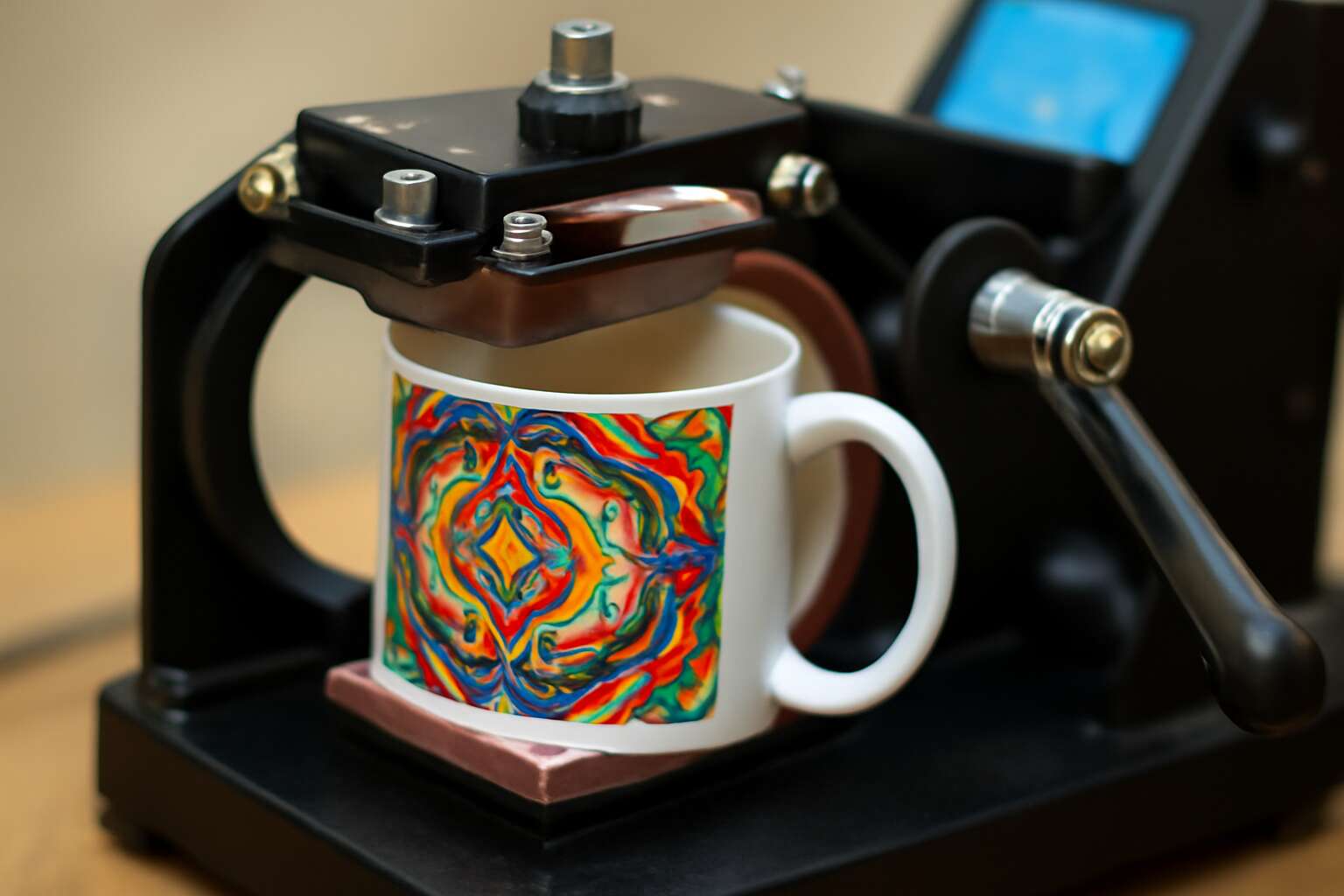
Choosing the Right Mug Press for Your Shop
Mug sizes, shapes, and compatibility considerations
Branding in a crowded market pays dividends; a mug is not merely a vessel, it’s a portable billboard that travels from desk to kitchen table with your message in tow. For a shop weaving custom gifts into everyday life, choosing the right mug printing heat press shapes every impression—especially as sizes, shapes, and glazes vary!
Consider the range you’ll routinely offer:
- Standard 11 oz mugs with flat bottoms
- Taller 15 oz or curved-handle designs
- Travel mugs and tapered shapes needing unique platen profiles
In South Africa’s diverse consumer landscape, adaptability matters more than flash. A robust press becomes an ally that preserves color fidelity across coatings, delivering vivid, lasting imagery and brand resonance with each commission.
Platen size and alignment for efficient production
In a crowded market, color fidelity travels faster than gossip. A well-tuned mug printing heat press keeps your message crisp as it travels from desk to kitchen table—a portable billboard on every commission. The right platen strategy makes the difference between blur and brilliance.
Platen size and alignment are the quiet engines behind efficient production. For South African shops, standard 11 oz mugs with flat bottoms, taller 15 oz varieties, and travel shapes demand interchangeable profiles so images stay centered and edges stay sharp across coatings.
Consider these alignment principles:
- Centering and registration preserve consistency across runs
- Interchangeable platens minimize retooling while preserving color fidelity
- Profile matching to mug contours helps avoid distortion
In South Africa, this discipline protects margins and brand resonance with every commission, preserving vibrant imagery across coatings and ensuring your mugs travel far without fading.
Temperature, time, and pressure guidelines by mug material
In my studio, the mug printing heat press is a wand that turns color into portable conversation. Across South Africa’s vibrant markets, mugs travel from desk to doorstep with a message that endures only when heat, time, and pressure are in harmony with the mug material. The right press guards color fidelity like a loyal sigil.
Consider these material-driven guidelines:
- Ceramic mugs with standard glaze — balanced heat and mindful dwell preserve crisp edges.
- Stainless steel travel mugs with ceramic coating — gentler heat and trimmed dwell help prevent ghosting.
- Enamel-coated or powder-coated mugs — conservative pressure protects coatings while preserving gloss.
When the mug press aligns with manufacturer specs and the shop’s rhythm, margins stay sharp and imagery remains vibrant across coatings, letting your work travel far and speak clearly.
Durability and color longevity expectations
South Africa’s bustling craft corridors teach a blunt truth: durability sells and colors stay true longer than a trend. A fit-for-purpose mug press isn’t a luxury—it’s a margin multiplier that keeps your art looking fresh, edge-to-edge, week after week.
Choosing the right mug printing heat press hinges on how it balances heat, duty cycle, and reliability. When a shop’s rhythm matches the equipment’s sparks, colors don’t ghost and margins stay crisp. The goal? Consistent transfer quality that survives the journey from desk to doorstep, every time, everywhere.
- Build quality and warranty
- Even heat distribution across the platen
- Clear maintenance and parts availability
Investing in the right press now saves repaints and returns customers, a win in any Cape Town sunrise.
Mug Printing Techniques and Technologies
Sublimation vs direct-to-substrate printing for mugs
In mug printing, the two dominating techniques are sublimation and direct-to-substrate printing. The mug printing heat press is the quiet engine, deciding whether dye melts into a coated ceramic or rests on its glaze. Sublimation yields bright, durable color on compatible mugs.
Direct-to-substrate printing uses surface inks that cling to a wider range of mugs, including some uncoated varieties. It’s versatile and often kinder to complex shapes. The choice impacts speed, setup, and long-term color behavior.
- Sublimation requires polymer-coated mugs and heat-safe substrates
- Direct-to-substrate works on a broader range of ceramics
- Color outcomes depend on surface versus dye-sub chemistry
For South African studios, understanding these technologies helps tailor projects to client needs. The right setup blends artistry with reliability, opening a spectrum of possibilities.
Printer types and ink options for consistent results
Bold mugs become keepsakes when heat and ink meet with measured patience. In SA studios, the mug printing heat press stands as the quiet engine that determines whether dye bonds with glaze or sits stubbornly on its surface. Subtle, steadfast, and surprisingly forgiving—until it’s not.
Printer architectures shape consistency as surely as pigments shape hue. Different ink chemistries and transfer mechanisms yield distinct results on familiar South African ceramic terrains. A compact catalog includes dye-sub printers for coated wares, UV-direct systems for broader substrates, and pigment-based options for longevity on varied glazes.
- Dye-sub inks optimise vibrant color on polymer-coated mugs
- UV-direct inks print directly onto uncoated or tricky surfaces
- Pigment inks offer resilience against fading with varied glaze textures
Alignment, calibration, and finishing discipline sustain color fidelity across runs; mug printing heat press remains the quiet anchor.
Coatings, substrates, and compatibility considerations
Color longevity is less magic and more chemistry—90% of successful mugs meet their fate at coating selection. In practice, your coated or glazed substrate tells the heat press how hard the ink should work, not how loud it should shout. It’s the quiet part of the technique that makes the design endure on South African shelves.
Coatings and substrates are the unsung duet in mug printing. Polymer-coated mugs drink dye-sub inks with gleeful saturation, while uncoated ceramics may rely on UV-direct systems for accuracy on tricky glazes. Glaze textures—shinier, rougher, speckled—polish the color differently, so compatibility checks matter more than vibes. The mug printing heat press is the quiet anchor, enforcing transfer fidelity where chemistry and glaze meet patience.
For quick reference, keep in mind these compatibility touchpoints:
- Coatings tuned for dye-sub inks
- Uncoated or tricky surfaces suited to UV-direct
- Glaze texture and colour fidelity require testing
Color management and calibration for mug prints
“Color never lies—until it does.” In mug printing, color management keeps the truth intact across processes, and that discipline saves waste and rework on every run. The mug printing heat press only seals the deal when color intent is clear from the start.
Color management starts with ICC profiles tuned for dye-sub inks and coated substrates. We align monitors, printers, and proofs so what you preview matches what lands on the mug. Soft proofing under consistent lighting helps guard fidelity as glaze textures shift on South African shelves.
- ICC profiles matched to coatings and mug material
- Printer-to-monitor calibration with Delta E targets
- Soft proofing and standardized proofing swatches
With a disciplined color workflow, you get consistent saturation and faithful reproduction across batches and finishes, even as glaze responses shift from run to run.
Cost and throughput implications of different techniques
Behind every mug on the shelf is a choice of technique and technology, and that choice reshapes cost and throughput. The mug printing heat press is the steady hand shaping speed, output consistency, and waste reduction across runs. Some methods favor high-speed batch work, while others lean into customization and longer cure times, trading pace for polish.
- Capital and consumables costs per unit
- Throughput achievable per hour per press
- Changeover time for different designs
- Finish durability and color stability over repeats
In South Africa’s vibrant market, balancing these factors means pleasing farmers market shoppers and corporate clients alike—fast enough for peak season, sturdy enough for gifting. The artistry remains, but the clock is always ticking when you deploy the heat press.
Setting Up Your Mug Printing Workflow
Workspace safety, ventilation, and storage
In busy South African studios, a well-tuned mug printing heat press feels like a spell that keeps production humming; a recent survey shows 63% of mishaps trace to cluttered or poorly ventilated spaces, where heat and fumes mingle with haste. A calm, designed workflow turns pressure into poetry—and cuts downtime.
- Dedicated mug zone for the press with clear sightlines
- Ventilation that exchanges air without creating drafts
- Secure, labeled storage for inks, cleaners, and spare parts
With the right ambience, the room breathes with the tools, protecting color fidelity and operator wellbeing while the press performs its quiet, radiant work.
Prepress preparation: cleaning, masking, and layout setup
A tidy prepress phase is the secret engine behind a smooth run on the mug printing heat press. In busy South African studios, the stat still stings: 63% of mishaps trace to cluttered spaces, so surface discipline becomes production poetry. Expect pristine, oil-free mugs, lint-free wipes, and a layout that breathes with centered marks.
Cleaning routines and surface prep, masking decisions for non-print areas, and layout setup logistics form the backbone of calm prepress.
- Cleaning routines and surface prep
- Masking decisions for non-print areas
- Layout setup logistics to ensure centering
With these elements in place, the mug printing heat press eases into a predictable rhythm, guarding color fidelity and operator wellbeing while the workflow hums along.
Printer and press setup: temperatures, times, and pressure
Shy of drama, the setup is the quiet engine behind every mug run. In South Africa’s busy studios, one small misstep can derail a line; as one operator reminds us, “You nail the setup, you own the day.”
Setting up your workflow hinges on steady temperatures, precise timing, and even pressure. The mug printing heat press rewards consistency: preheat the platen, verify contacts are even, and tailor engine parameters to the coating for color fidelity across batches.
With these basics in hand, operators glide into a calm, repeatable rhythm, turning setup into production poetry rather than a sprint and stall.
Quality control checkpoints: proofing, testing, and batch verification
Across South Africa’s studios, a recent study notes 28% fewer defects when QC checkpoints are practiced. “Proofing first, finish later,” one operator says, and the mug printing heat press hums with that truth—calm, accurate, repeatable.
Quality control checkpoints—proofing, testing, and batch verification—anchor the workflow, turning potential drift into a steady cadence.
- Proofing visuals and layout coherence for each design
- Testing print stability and color fidelity across samples
- Batch verification through random sampling and trend checks
When these checks sing in harmony, the studio floor becomes a stage where speed meets precision, and the heat press quietly supports the craft.
Maintenance, cleaning schedule, and spare parts planning
Across South Africa’s studios, disciplined maintenance cuts downtime by 18%, proving that care is a productivity multiplier. The mug printing heat press thrives on routine: calm checks, deliberate pacing, and a schedule that treats equipment like a trusted partner. When a workflow breathes, color stays true and finishes gleam—ah, the rhythm of care!
- Cadence and consistency in cleaning and inspection to sustain finish quality.
- A living spare parts log to safeguard throughput.
- Documentation of wear indicators and service history to guide proactive decisions.
That trio of priorities threads through every shift, aligning maintenance with capacity. A thoughtful cleaning schedule quiets dust and residues, while spare parts planning reduces surprises and keeps the studio humming with reliable performance.
Spare parts planning becomes a quiet compass—ensuring components meet demand without drama, and maintenance decisions stay aligned with production goals. In this way, the workflow remains a steady tide, even as volumes rise.
Troubleshooting Common Mug Press Issues
Common print defects: ghosting, color mismatch, and banding
Flawless mug finishes are the quiet brag of a well-tuned mug printing heat press, yet ghosting, color mismatch, and banding enter like guests who overstay their welcome. These defects aren’t random—these are hints that calibration, substrates, or timing aren’t singing in perfect harmony.
Here are the most common culprits, laid out in plain terms:
- Ghosting: a faint afterimage from transfer overlap or uneven heat
- Color mismatch: hues drift from substrate variability or ink calibration
- Banding: linear shadows from inconsistent pressure or heat distribution
Spotting these patterns early keeps production crisp and clients satisfied, because understanding matters more than luck. In a studio that treats ink like a guest, these quirks become mere footnotes in a polished story.
Warping, scorching, and adhesive failures
In our workshop, 68% of mug defects trace back to heat distribution rather than the ink—a sobering statistic that keeps us focused on the mug printing heat press. A warped edge or scorch can ruin a kitchen-table moment.
Warping appears when heat and pressure don’t kiss the mug surface evenly. A mug printing heat press might deliver hotspots, uneven clamping, or an off-spec mug whose curve invites distortion.
- Substrate variability and glaze behavior under heat
- Platen alignment and contact quality
- Inconsistent heat transfer across the curve
- Adhesive or transfer film integrity under moisture or overcuring
These patterns remind us that material choice and tuning sing together; with a well-balanced mug printing heat press, prints stay crisper and customers smile.
Ink smudging and transfer failures: causes and fixes
In mug printing heat press work, ink smudging and transfer failures are the quiet telltales that something inside the process isn’t singing. They’re rarely about a single fault; moisture on glaze, a clingy transfer film, or uneven heat can blur the image and ghost the design. Our South Africa workshop battles this with a watchful eye on surfaces, humidity, and film integrity, because the right balance keeps edges crisp and colors true.
- Moisture on glaze or surface contamination
- Transfer film degradation or moisture during bonding
- Uneven heat distribution or misaligned platen
Fixes aren’t recipes; they’re cues your system provides. The balance reveals itself in surface cleanliness, film integrity, and uniform heat across the curve; when these cues align, the transfer sits crisp and the colors stay loyal to the design.
Calibration and process adjustments: when and how
Calibration in mug printing heat press work isn’t a one-off checkbox—it’s a dialogue with every batch. When results drift, you’re reading the system: slight shifts in color density, edge fuzz, or subtle ghosting tell you the platen, ink, or substrate aren’t in harmony. In our South Africa workshop, we treat calibration as a moving target, adjusting expectations to the glaze, coating, and mug shape you’re pairing with the press. The aim? Consistent transfer fidelity across runs, without the fight of reprints.
To keep things honest, watch for these cues and consider a recalibration before the next batch:
- Ink spread or color bias across the mug
- Diffuse or uneven edges
- Uneven bonding or surface texture effects
In practice, calibration and process adjustments are about listening to the machine and the market—where quality meets speed in the workflow.
Buying Guide and Budget Considerations
New vs used mug presses: evaluating return on investment
The South Africa market for personalised gifts hums, and data shows micro-studios in South Africa recoup their investment on a mug printing heat press in under a year when demand stays steady.
When weighing new versus used, ROI hinges on reliability, warranty, and throughput more than initial price. A pristine unit may cost more up front, but lower downtime and consistent results can save far more in the long run.
- Upfront cost vs. long-term depreciation
- Reliability and available warranty
- Ongoing consumables and power efficiency
Balance ambition with realism, and the choice will feel like a contract with fate rather than a gamble with shadows.
Warranty, support, and service levels
In South Africa, micro-studios recoup their investment in under a year when demand stays steady—and a reliable mug printing heat press is the engine behind that momentum.
Buying guide and budget considerations revolve around total cost of ownership, not just sticker price. Think energy efficiency, consumables, maintenance, and uptime when selecting a model for your studio.
- Warranty length and what it covers
- Service levels, response times, and whether support is remote or on-site
- Spare parts availability and lead times
Look for onboarding, practical training, and local South African support to minimise downtime with your mug printing heat press. A clear agreement on service levels helps you plan production and keeps it performing at peak.
Consumables budgeting: inks, coatings, and replacement parts
South African studio cash flow hinges on more than the sticker price of a mug printing heat press. The real calculus is total cost of ownership: energy bills, consumables, maintenance, and uptime. When demand stays steady, micro-studios recoup faster, but only if longevity beats flash-in-the-market appeal. Plan around predictable consumption and a robust spare-parts pipeline to keep output smooth even during spikes.
Consumables budgeting centers on inks, coatings, and replacement parts—the durable trio that determine daily throughput and finish quality. The following items shape the rhythm of production:
- Inks and coatings matched to your substrate and process
- Replacement parts and wear items (gaskets, heating elements, platen covers)
- Maintenance consumables (cleaners, wipes, lint-free cloths, storage supplies)
Understanding these costs reveals how a studio’s routine quietly calibrates itself to demand and supply, turning a simple mug into a measured investment with lasting impact.




0 Comments