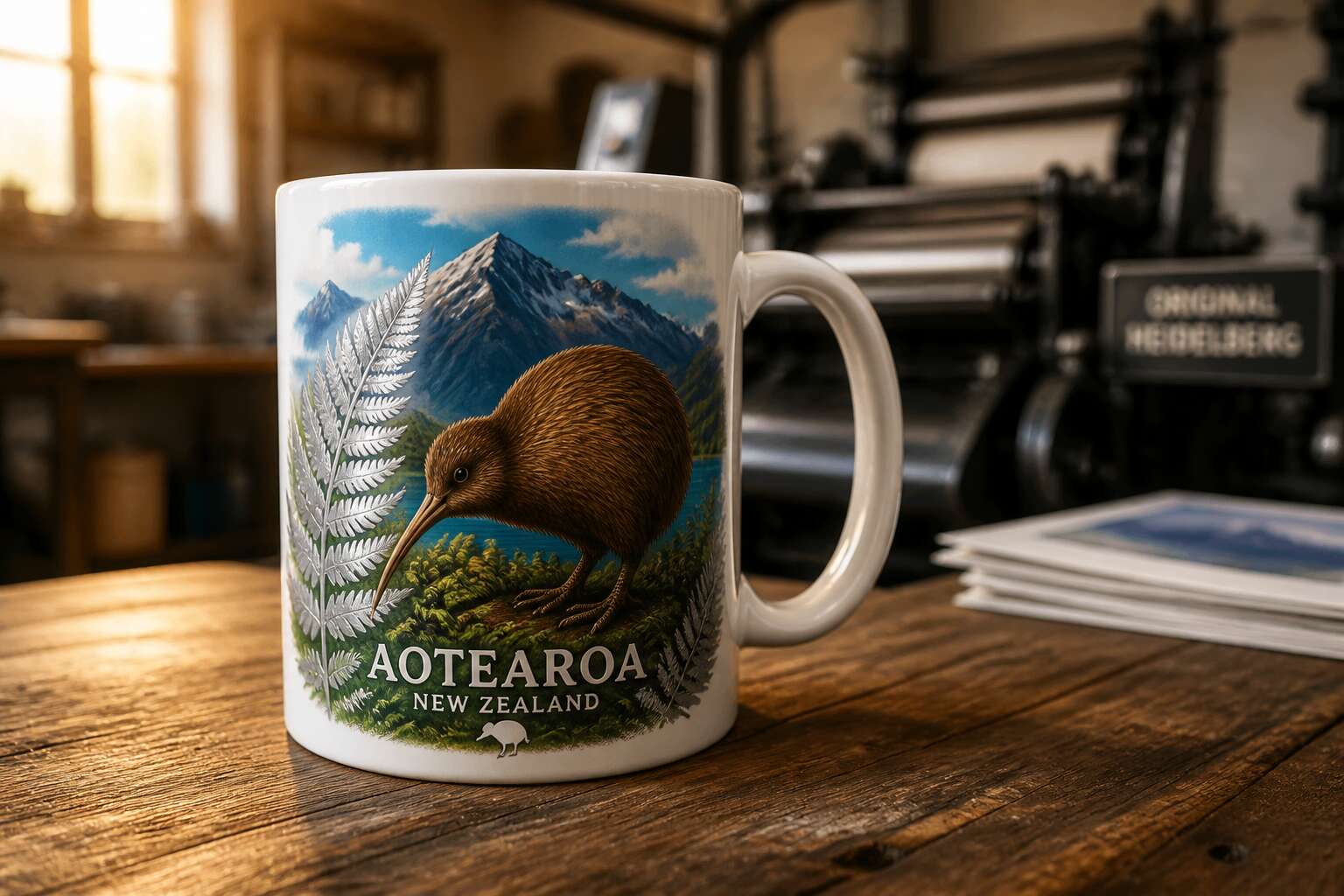
Choosing the Right Mug Base for Your Project
Ceramic, Porcelain, and Enamel Options
Most people choose a mug by its colour, then wonder why the print fades after a month. The base material decides everything, especially for mug printing nz. Ceramic mugs offer a porous surface that absorbs ink deeply, creating a muted finish that feels familiar and domestic. Porcelain, by contrast, is denser and smoother, allowing sharper colour reproduction and a brighter canvas for detailed artwork. Enamel sits apart entirely, its metal core requiring a different curing process altogether.
The choice often comes down to how the object will be handled. I have watched customers fall for a glossy finish, only to see it chip at the first drop. A ceramic mug in a roadside café will show wear differently than an enamel camping cup exposed to wind and fire. The psychological weight of the object matters too. People drink from what they trust, and the texture beneath their fingers shapes that trust. That trust is what mug printing nz ultimately sells.
Standard Mugs vs. Tall and Oversized Shapes
Three seconds! That is how long a customer spends deciding whether a mug feels right in their hand. The base shape makes that first impression, not the artwork. For mug printing nz, choosing between standard and oversized profiles changes everything from print placement to how the rim meets the lips.
Standard mugs, typically 330ml, keep designs within a compact vertical sweep. I have watched tall shapes stretch artwork upward, demanding bolder typography to hold attention. Oversized bases, holding 400ml or more, offer a wider thermal transfer surface but obscure small details.
- Standard bases carry heritage logos and monograms with ease.
- Tall shapes shift the eye upward, rewarding vertical compositions.
- Oversized bases demand large scale graphics to avoid emptiness.
White Glossy vs. Matte and Coloured Finishes
Matte surfaces absorb light, altering how you perceive the printed ink. I noticed this last week when comparing supplier samples, the glossy white felt sharp while the matte felt quieter. For mug printing nz, white glossy remains the safest base because it keeps colours vivid, but it shows every fingerprint. Matte hides smudges and softens contrast, which suits subtle artwork.
Coloured finishes demand extra planning. The base colour interacts with your design, so a red logo on a dark blue mug looks muddy. Darker bases need a white underbase, adding thickness that changes the final silhouette. Always request samples before committing.
- White glossy: crisp detail and high contrast
- Matte white: muted tones and better scratch resistance
- Coloured bases: bold statements with careful underbase work
Handle Styles and Grip Considerations
The handle determines how a mug sits in the hand, and this is where most projects fail. A narrow loop might look elegant, but it forces the fingers into an awkward pinch. The D-shaped handle remains the standard because it suits most grips. For mug printing nz, the gap between handle and vessel body changes the heat transfer and the holding position. A wide gap keeps the knuckles away from the warm surface.
The base contributes equally to the balance. A tapered base looks refined but tips easily. A chunky base feels stable but heavy. The handle must counterbalance the weight of the contents, or the whole experience turns uncomfortable.
- Inspect the handle seam for rough edges
- Confirm the space allows a full grip
- Evaluate the weight distribution when the mug is full
Popular Mug Printing Methods and Their Differences
Sublimation Printing for Vibrant All-Over Colour
Few techniques offer the colour saturation of dye sublimation. The process heats solid inks into gas, bonding them permanently with the mug’s polymer coating. For mug printing nz, this spells crisp gradients and uninterrupted artwork.
Unlike direct printing, sublimation leaves no raised texture. It also conquers the trickiest part of a cylindrical surface, the seam. Several traits define this approach.
- Full wraparound coverage without visible overlap
- Photographic detail with subtle tonal shifts
- Durable surface that resists washing and scratching
This method excels on white glossy mugs, yet it cannot print white ink. So dark or coloured blanks rule it out. I accept that trade-off when the goal is an unforgettable visual punch!
UV Printing for Textured and 3D Effects
UV printing takes a different route. Instead of bonding with a coating, it deposits a layer of ink that sits on the surface. That layer can be built up to create a tactile dimension. For mug printing nz, this technique offers something sublimation cannot: a raised texture that invites the fingertip to explore.
The process uses light to cure each drop instantly. This gives you precise control over depth. You can craft a ridged finish, a glossy spot, or a faux enamel seal.
- Works on dark mugs because it prints white
- Allows partial textures, not just full coverage
- Ideal for small batch runs with detailed relief
Compared to other methods, UV printing is less about smooth gradients and more about physical presence. The trade-off appears in the hand. A sublimated mug feels smooth as glass. A UV printed mug feels deliberate, almost sculptural.
Screen Printing for Simple Spot Colours
Screen printing is the most straightforward path for simple spot colours. It forces ink through a mesh stencil directly onto the ceramic, laying down a flat block of colour that endures hundreds of dishwasher cycles. For mug printing nz, this is the dependable choice when your artwork stays deliberately simple.
The practical edges are easy to see:
- Thick opaque ink holds its tone on dark mug bodies.
- Setup costs are moderate, but unit price drops sharply with volume.
- Gradients are difficult, so solid blocks work best!
I have inspected screen printed mugs that appeared crisp after years of daily coffee. The texture rests slightly raised, yet it never flakes. If you order mug printing nz in larger quantities, screen printing delivers the lowest cost per unit. It sets aside the all-over richness of sublimation and the relief of UV printing for one honest virtue: durable colour that lasts.
Laser Engraving for Durable, Monochrome Designs
Laser engraving removes a thin layer of ceramic to create a carved, monochrome design. No ink means nothing to fade or flake. For mug printing nz, this method delivers a refined look for text, logos, and line art.
The contrast depends on the mug body. Lighter colours work best because the engraved area shows as white or grey against the glaze. Dark mugs cannot display the design clearly. The method also favours simple artwork. Fine details reproduce accurately, but gradients and full colour are impossible. I have inspected laser engraved mugs after years of machine washing, and the definition remains sharp. The recessed texture gives the design a tactile honesty most other methods lack. For mug printing nz, this is a quiet alternative to ink based processes.
- Engraved surfaces feel slightly rough.
- Dishwasher cycles do not wear the design.
- High contrast appears on light ceramics.
Pad Printing for Curved or Unusual Surfaces
Pad printing, originally developed for watch faces, now handles the mugs that flat processes cannot. A silicone pad picks up ink from a cliché and presses it onto the surface, conforming to tapered bodies, recessed panels, and textured grips. The ink layer stays thin and precise. This technique does not wrap the entire mug like sublimation, nor does it require a stable plane like screen printing.
The critical variables sit in the ink itself. Pad hardness, ink viscosity, and cliché depth all influence the final impression. For mug printing nz, this process suits small runs of single colour logos and numbering on unusual shapes.
When reviewing a sample for mug printing nz, I always inspect three details:
- The pad should not trap air bubbles on concave surfaces.
- The ink must resist the dishwasher without a protective coating.
- Recessed areas require a harder pad for clean release.
Pad printing will never deliver photographic colour, but for curved ceramic it remains the practical option.
Heat Transfer Vinyl and DIY Alternatives
HTV, or heat transfer vinyl, is the DIY favourite. You cut a design, weed out the excess, and press it on with a household iron. For mug printing nz, this is a budget way to test ideas before committing to bulk orders. The vinyl sits on top of the glaze, so it lacks the durability of sublimation or laser engraving. Mug printing nz services rarely recommend HTV for commercial use because the transfer is only as strong as the adhesive behind it.
I remember my first attempt! The vinyl peeled at the rim within weeks. Dishwashers are brutal on these transfers.
- Use a mug press instead of an iron for even pressure
- Choose vinyl rated for dishwashing
- Avoid curved areas where the vinyl can lift
DIY alternatives like stencils and ceramic markers work for single items but fade quickly.
How to Prepare Flawless Artwork for a Mug Printer
Recommended Resolution and File Formats
Getting artwork right for mug printing nz starts with understanding resolution. A low-resolution image might look acceptable on a phone screen, but it turns into a blurry mess once transferred to ceramic. You need at least 300 DPI for crisp, clean lines. My go-to rule is simple: if the design looks pixelated when you zoom in, it will look worse on the mug.
File format matters just as much. PNG files handle transparency well, while JPEG works for simpler photographs. Vector files like SVG or EPS are excellent for logos and text because they scale without losing any sharpness. Here is what I recommend:
– Export your artwork at 300 DPI minimum
– Use CMYK colour mode instead of RGB for accurate prints
– Convert all fonts to outlines before sending your file
These steps save you from the disappointment of a washed-out or fuzzy final product. Remember, your design has to wrap around a curved surface, so leave a few millimetres of breathing room at the edges. That small buffer ensures nothing vital gets trimmed or distorted.
Design Placement, Bleed, and Safe Zones
The geometry of a mug’s curved surface is an unforgiving teacher. When you position artwork for mug printing nz, you are not designing for a flat canvas, but for a cylinder that distorts everything near its edge. The printer’s platen wraps the image, so your composition must respect the visual equator where the design sits.
Bleed is your insurance policy. A standard 3mm bleed on all sides prevents white slivers from appearing when the coating cures. Safe zones, however, require more nuance. The handle junction and the bottom 25mm of the mug often come into contact with fingers, so keeping critical content within the central 180 degrees of the wrap is essential.
- Maintain a 15mm safety margin from the handle’s shadow line
- Keep text and logos at least 10mm above the mug’s base
- Place important elements no higher than 45mm from the rim, unless you want a full-height graphic
These parameters acquire extra urgency for tall mugs, where the print area shifts vertically. I always test with a paper template before committing to a full run, because the curvature at the shoulders can trap ink unexpectedly. Nobody wants to rediscover the physics of a ceramic cylinder after 500 units are already fired.
Understanding CMYK vs. RGB Colour Output
A single RGB hex value promises a neon brilliance that CMYK ink simply cannot deliver. When you send artwork for mug printing nz, the printer’s conversion software interprets your screen colours through its own profile, and the gap between monitor and glaze is where most disappointment begins.
Flawless preparation starts with choosing the right colour space before you design. Work in CMYK from the outset, matching the profile to the mug’s finish, glossy or matte. The shifts become obvious in specific areas:
- Vibrant greens lose saturation when converted from RGB.
- Deep blues shift toward purple on matte coatings.
- Skin tones develop a yellow cast without a calibrated profile.
I have seen full ceramic runs fired with perfectly crisp art, yet the client rejected every unit because the orange logo arrived brown. With mug printing nz, the printer did nothing wrong. The RGB file carried colours that CMYK could never hold, and no platen or pressure setting could fix that.
Using Printer Templates to Avoid Distortion
A mug is a cylinder, and a flat image wraps around it unevenly. Curvature distorts text near the edges. Printer templates for mug printing nz exist to solve this before you click print.
These templates map your design onto the actual radius of the blank. A central logo stays sharp, while elements near the rim remain legible. Without this guide, your artwork stretches unpredictably at the seams.
- Align critical text to the central wrap line of the template.
- Test the art with a proof print on paper wrapped around the empty mug.
- Download the template file for the exact mug model, not a generic version.
I always download the file for the specific 15oz or 11oz blank I intend to use. A generic template fails on a tapered profile. That first download is the difference between a crisp result and a distorted one. In mug printing nz, the template provides the essential reference for the curved canvas.
Common Mistakes That Ruin Mug Prints
The biggest myth is that a screen image will print as-is. A file that looks crisp on your monitor can emerge as a dull mess on ceramic. That is because mug printing nz relies on ink absorption, which differs from light emission. Gradients muddle, thin fonts break, and low-resolution images reveal their shortcomings at size.
Common mistakes follow a pattern.
- Submitting RGB files produces washed-out results.
- Placing critical elements near the rim invites curvature distortion.
- Ignoring the material finish changes the final colour.
I have seen artwork fail because the designer assumed one template fit all mug shapes. A tapered 15oz blank needs different alignment than a straight 11oz cylinder. In mug printing nz, this separation between careful preparation and guesswork shows up on every finished cup.
Finding the Right Mug Printing Service in New Zealand
Local Online Print Shops vs. International Companies
Shipping a mug from Auckland to Johannesburg takes a week longer than you expect! Choosing between a local New Zealand online print shop and an international supplier matters more than the design itself when you need mug printing nz.
Local printers understand the New Zealand market. They know the postal quirks, the courier routes, and the GST rules. International companies often offer lower prices, but their shipping estimates ignore reality. Your 50 mugs might arrive in six weeks instead of six days.
Consider these factors before committing:
- Shipping cost and tracking reliability
- Communication hours and response speed
- Reprint policies for damaged batches
A South African buyer may find international prices tempting, but a broken mug from abroad earns no refunds. For mug printing nz, local providers remain the sensible option. International services work fine for bulk orders, yet personal projects deserve better.
Photo Centres and In-Store Kiosks
Photo centres and in-store kiosks offer mug printing nz services that sit between online orders and professional print shops. You walk in, select a photo, and wait while the machine does the work. These kiosks handle simple designs well, especially for single mugs or small gifts.
Most photo centres use dye sublimation presses. The quality depends on the operator and the equipment maintenance. For mug printing nz, a busy store with fresh consumables generally produces sharper results than a neglected kiosk in a quiet corner. I have seen both.
- Check the sample mugs on display before ordering
- Ask about turnaround time and pickup options
- Inspect the print before you leave the store
In-store kiosks suit urgent needs. Photo centres provide better support from staff who handle printing issues daily. Your choice comes down to speed versus accountability.
Low Minimum Order Quantities for Small Runs
Small orders are the quiet backbone of custom mug production. Many suppliers will not touch a job under fifty units, which leaves individuals and small teams stranded. In New Zealand, a service that offers low minimum order quantities changes that calculation entirely. You pay for exactly what you need, no more and no less.
I have seen a local business order twelve mugs for a welcome kit, then return a month later for a hundred. The entry point matters. When a provider allows a run of five or ten pieces, testing a design becomes practical. That is how mug printing nz suppliers earn loyalty, by accommodating the awkward middle ground that bulk printers ignore.
- The advertised MOQ rarely includes setup or artwork fees
- Per-unit pricing can climb sharply when orders fall below twenty pieces
- Delivery timelines stretch when machines only run once a week
Short runs need clear communication about quantity limits before you commit. Some shops quote identical prices for five and twenty mugs, hiding the real cost in a base setup charge. Others genuinely discount per-unit rates as the count rises. Reading the fine print saves you from a surprise invoice.
Bulk Printing Discounts and Wholesale Suppliers
Bulk orders change the economics of custom mugs completely. When you move past small runs, per unit prices drop and shipping becomes easier to absorb. Wholesale suppliers in New Zealand often reserve their best rates for clients who commit to volume, sometimes offering tiered pricing that rewards every additional carton.
Finding the right mug printing nz service means comparing those tiers carefully. Some printers quote a flat rate for anything above twenty units. Others shift their pricing at fifty, a hundred, and two hundred pieces. That difference matters for a business planning repeat promotions. A supplier who publishes transparent wholesale tables saves you the awkward negotiation dance.
Consider what matters most for your operation:
– Consistent turnaround times for restocks
– Blank mug quality that survives repeated dishwasher cycles
– Proof approval processes that do not slow production
– Pallet or carton delivery options for larger quantities
For mug printing nz businesses, the right bulk partner is the one whose minimums, margins, and turnaround align with your actual sales rhythm.
Turnaround Times, Shipping, and Rural Delivery
Turnaround times can make or break a promotional campaign. Most mug printing nz services quote seven to ten working days, but that window shifts when you factor in proof approvals and courier schedules. Ask about the clock, and ask twice! Does the countdown start when you pay, or after you approve the artwork? Those details matter more than the advertised lead time.
Shipping within Auckland and Wellington moves fast. Rural delivery is another story. Couriers add one to three days for rural addresses, sometimes more during peak seasons. I always ask about rural cartage before committing. Some mug printing nz providers offer tracked options, and others use standard post. The cost difference is small. The reassurance gap is not.
When you compare courier policies, look for:
- Delivery windows stated in writing
- Rural surcharge disclosure
- Saturday delivery availability
Customer Reviews and Sample Quality Checks
A recent survey noted that 84% of customers trust online reviews as much as a personal referral. Sifting through customer reviews for a mug printing nz provider reveals patterns that marketing pages hide. I tend to look for comments about colour accuracy and the sturdiness of the print after a few dishwasher cycles. Repeated praise for those details carries more weight than a single complaint about delivery speed.
I also recommend ordering a blank sample before committing to a large batch. This step is standard practice for savvy buyers. Evaluate the sample with an honest eye.
1. Compare the printed colours against your original artwork.
2. Test the mug’s weight and balance when empty and full.
3. Run the mug through a dishwasher cycle and check for fading.
A sample that fails these checks signals trouble ahead. The right service will encourage this curiosity. When a mug printing nz partner accepts scrutiny, you have found a reliable supplier. The samples guide your decision with evidence instead of guesswork. Trust the tangible proof you hold in your hands.
Care and Longevity of Custom Printed Mugs
Dishwasher Safety and Recommended Washing Methods
Your custom mug is not immortal. Dishwasher cycles can degrade the print over time, especially when abrasive powder detergents scrape the surface. Hand washing with warm water and a soft sponge preserves the finish far longer. For mug printing nz customers who choose sublimation, the ink sits within the coating, yet harsh detergents still dull the gloss over months of use.
A few rules keep the design crisp:
- Place the mug away from the heating element.
- Skip high temperature wash cycles.
- Dry with a lint free cloth.
Even with careful handling, expect natural fading after years of daily use. The longevity of your print depends on the firing temperature and the quality of the base coat. If you order mug printing nz, ask your supplier about the dishwasher rating before you commit.
Microwave Use and Heat Resistance
Most people assume every printed mug survives the microwave. That assumption can end with sparking, scorched handles, or a design that bubbles away from the surface. Mug printing nz services use different methods, and each responds to heat differently. Sublimated prints handle microwaving well because the ink bonds with the coating. UV printed designs may soften or discolour when exposed to direct microwave heat.
Consider these heat resistance factors:
- Gold or metallic accents reflect microwaves and can cause arcing.
- Dark, full coverage prints absorb more energy than light designs.
- Handles with thick walls heat unevenly, creating stress points.
For mug printing nz orders, the base ceramic matters as much as the ink. Low fired mugs tolerate less thermal shock. A quality mug should feel warm, not searing, on the rim after a minute on high.
Preventing Scratches, Crazing, and Fading
Scratches accumulate silently. A metal teaspoon scraping across a sublimated surface leaves hairline marks that gather oils and dull the image. Crazing appears when the glaze develops tiny fractures from sudden temperature shifts. Fading happens gradually, as UV printed layers break down under sunlight and abrasive scrubbing.
The ceramic body decides how long a print survives. Mug printing nz relies on quality blanks, because a poor glaze clouds the design from within. Even the best mug printing nz can fail if the base ceramic was fired poorly. Hand washing with a soft sponge remains the safest routine. Avoid steel wool and harsh scouring powders.
Store printed mugs without stacking them. Rims catch damage when another mug’s base grinds against them.
– Rotate mugs in the cupboard so they rest on the base.
– Use wooden or silicone stirrers.
– Inspect the glaze monthly for hairline cracks.
For daily use, keep decorated pieces below 80 degrees Celsius and away from direct window light. A cared-for mug holds its colour for years.
How Long Different Printing Methods Last
Most printed mugs fail within the first eighteen months, but the degradation often traces back to dish soap and metal utensils rather than the print itself. Sublimated inks can stay vivid for a decade, provided the mug never sees an abrasive pad. UV printed layers, however, show visible wear after three to five years, particularly when left near a kitchen window.
- Sublimation: 10 to 15 years with gentle hand washing
- UV printing: 3 to 5 years before noticeable fading
- Laser engraving: as long as the ceramic survives
The ceramic body remains the governing variable in any mug printing nz order. A dense, well fired porcelain base protects the design from moisture and thermal shock. South African homes with intense sunlight will see faster colour breakdown on glossy blanks, so the choice of printing method cannot be separated from the environment. Mug printing nz longevity is a contract between the ink system and your storage habits.
Storage Tips for Bridal and Business Batches
Custom mugs fail more often in storage than in the dishwasher. A bridal batch left in a hot garage for three months will disappoint more than any ink degradation. Business clients notice scuffed edges before they notice a fading logo.
Store printed mugs in a cool, dry place away from direct sunlight. Stack them with a soft cloth between each cup. Never let them knock together in a moving box. For South African summers, avoid hot garages and sunlit shelves.
- Wrap each mug individually in tissue paper
- Keep batches in their original printer packaging
- Store handles facing the same direction to prevent chipping
A mug printing nz order demands the same care as the printing itself. Whether you order a batch for a wedding or a corporate event, the storage routine decides the outcome. Porcelain blanks survive decades, but poor storage ruins them in weeks.
Creative Mug Printing Ideas for the Kiwi Market
Wedding Favours and Table Settings
Nearly 70% of Kiwi couples now include a practical keepsake in their wedding favours. Using mug printing nz, you can craft something useful and memorable. Instead of generic branding, design mugs that double as table markers. Print each guest’s name and a short note on the side.
Common themes for a local touch include:
- native flora like silver ferns
- coastal motifs such as pōhutukawa
- colloquial phrases that spark a laugh
For the table setting itself, mugs can hold cutlery or a stem of flowers. This removes the need for separate place cards and disposable cups. Guests leave with a practical item that reminds them of the occasion. The result is a favour that gets used long after the last dance.
Corporate Gifts and Staff Recognition
Corporate gifting in New Zealand often misses the mark with generic pens and stress balls. A custom mug, produced with quality mug printing nz, becomes a daily touchpoint. For staff recognition, consider a mug that tells a story. Print the employee’s start date, a project milestone, or a team inside joke. The mug sits on their desk, a quiet reminder of their value.
For client gifts, personalisation matters more than logo size. Use the mug to highlight a shared achievement or a local landmark. The design should feel intentional, not like a promotional afterthought.
Here are three approaches that work well in the Kiwi office culture:
1. Use a matte finish with a single bold colour for a modern feel.
2. Engrave the recipient’s name for a permanent, elegant touch.
3. Feature a map of their hometown or a favourite surf spot.
When the mug aligns with the recipient’s identity, it gets used. That usage is the true measure of a successful corporate gift.
Tourist Souvenirs and Local Landmark Designs
Every tourist leaves New Zealand with a photo, but a reliable mug printing nz service can turn a fleeting memory into a daily ritual. The Kiwi market craves objects that echo the landscape, not generic trinkets. Consider a mug etched with the silhouette of the Sky Tower or a hand-drawn map of the Coromandel. These designs speak to a specific place. Popular landmarks that sell well include:
- Milford Sound’s sheer cliffs
- The Rangitoto skyline
- Napier’s wooden piers
For local customers, a mug that carries their own neighbourhood, like a subtle outline of Mount Taranaki, feels like a secret. The ink fades, yet the connection lingers. That is the value of a well-printed mug.
Sports Club Rewards and Fundraising Merchandise
Sports clubs across New Zealand are sitting on a fundraising asset that rarely gets a second look. The humble mug offers a low cost item with high perceived value when it carries a club crest or a player’s name. A dedicated mug printing nz service can turn a plain ceramic blank into something supporters actually want to buy, not just receive.
Reward mugs work best when they feel personal. A player of the day mug with a cartoon face printed on it becomes a talking point at morning tea. Sponsors also respond well to branded mugs, especially when the logo sits on the side they see while holding it. For fundraising, consider these practical variations:
- Mugs with the full season fixture list printed around the base
- Mugs featuring a classic team photo from a championship year
- Mugs with the club anthem lyrics hidden on the inside rim
Local clubs have found that mug printing nz services offering small minimum orders keep the financial risk low. The real return comes from team visibility, as each mug ends up on a kitchen table or office desk for months. That repeated exposure builds supporter loyalty without a single paid advertisement.
Seasonal Treats for Christmas and Waitangi Day
Christmas in New Zealand means barbecues, beach cricket, and a peculiar affection for the humble mug. A seasonal print with pohutukawa flowers or a kiwi in a Santa hat captures the summer holiday mood. Families order these through a mug printing nz service in early November, and they sell out fast!
Waitangi Day offers a different flavour. February 6th calls for designs honouring Māori motifs. The koru pattern translates beautifully to ceramic, and the contrast between black and white gloss gives a print gravitas.
Some seasonal designs stand out:
- Pairs of matching mugs, one side showing the Christmas tree, the other the beach
- A calendar print around the rim listing the twelve days of summer
- Silver fern and jade palettes instead of traditional red and green
The best designs respect the occasion and stay understated. Mug printing nz suppliers who use dye sublimation handle the curved surface.



0 Comments