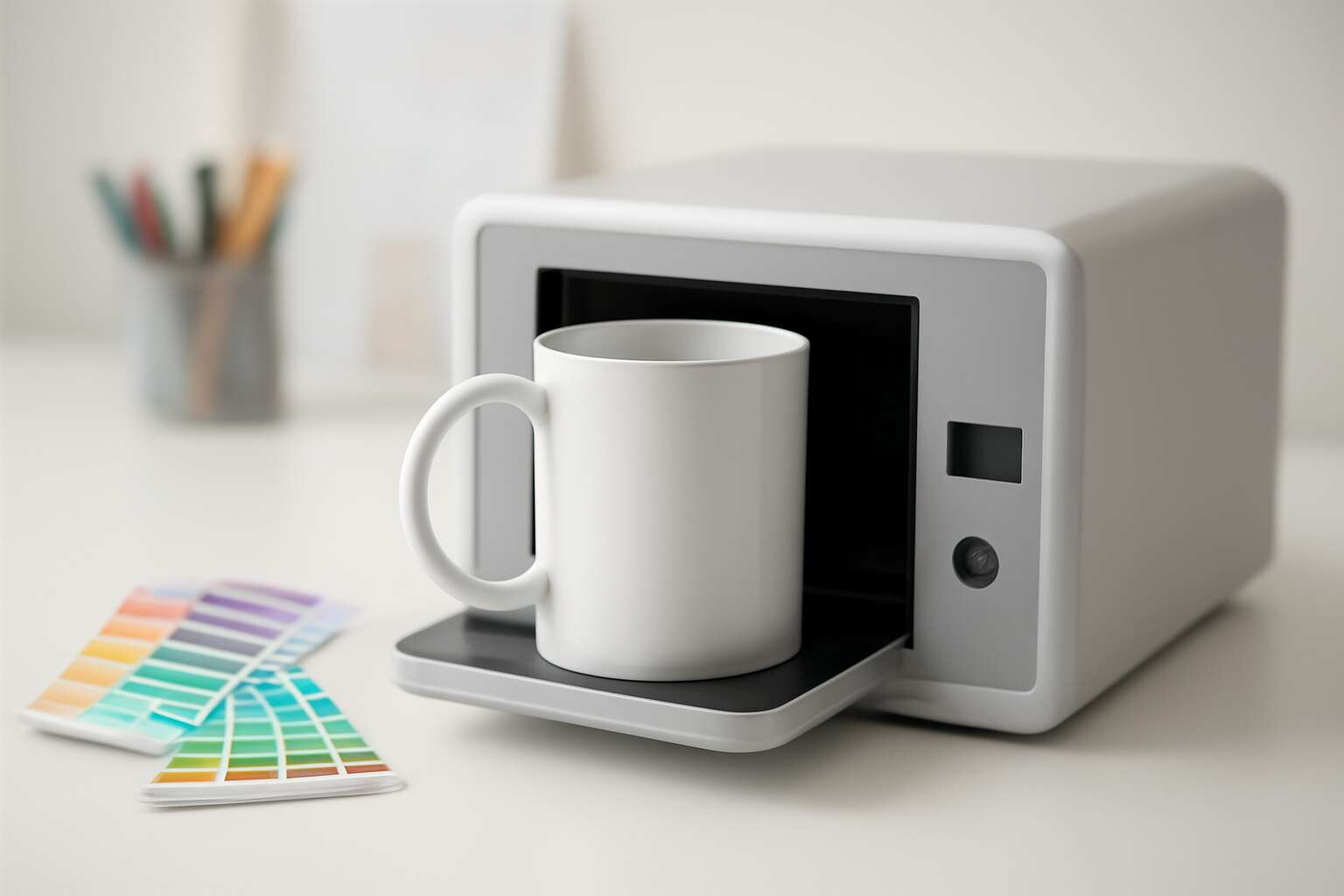
Mug Printing Equipment Overview
Understanding the concept and how it works
South Africa’s mug culture is sipping hot and fast; a market pulse shows a 34% jump in personalised mug orders across cafés and offices. That momentum rests on a simple tool: the mug printing oven. This device fuses ink to ceramic through controlled heat and pressure, turning a flat design into a durable, dishwasher-friendly souvenir. The process starts with artwork printed on heat-transfer paper, which is then aligned on the mug and baked to set the image.
Understanding how it works means appreciating temperature, time, and uniform heat. The device delivers even heat, avoids scorching, and provides predictable results batch after batch. In practice, operators rely on precise temperature settings, calibrated dwell times, and proper transfer materials to keep colours vibrant and durable.
- Even heat distribution for consistent results
- Programmable timers to prevent under- or overcooking
- Safety features and easy maintenance
Key features and technical specifications to evaluate
In South Africa’s cafés and corporate gift rooms, mug orders are surging—34% last year—turning kitchens into studios of steam and memory. The mug printing oven sits at the heart of this craft, fusing ink to ceramic with measured, ritual precision.
Built for steady throughput, it pairs a tight temperature window with a uniform heat chamber to banish scorching and uneven results. It excels in batch work, delivering reliable outcomes day after day.
- Even heat distribution for consistent results
- Programmable timers to prevent under- or overcooking
- Safety features and easy maintenance
Specifications hinge on practical figures: 160–180°C, 60–120 seconds, 1000–1500W. Compatible with standard heat-transfer media, mugs up to 325 ml, and straightforward maintenance keeps the colours bright and durable.
Choosing the right model for your operation
Choosing the right model for your operation means matching capacity to demand without sacrificing finish. The mug printing oven at the heart of your setup should align with batch size, daily throughput, and a predictable heat profile. With steady throughput and uniform results, you turn every order into a dependable piece of your shop’s story.
Key decision drivers:
- Throughput and cycle time to meet demand without bottlenecks
- Compatibility with mug sizes, shapes, and heat-transfer media
- Maintenance, safety features, and service support
In practice, evaluate the temperature window, heat distribution, and the ease of cleaning; these details matter as much as advertised specs, because real-world wear reveals a model’s true character.
Use, maintenance, and optimization for best results
In a market where a coffee mug can become a gift at a moment’s notice, reliability is the competitive edge. “Quality is never an accident,” goes the shop-floor creed, echoing as designs emerge with laser-sharp clarity.
The mug printing oven anchors the workflow, balancing heat consistency with finish uniformity across batches. Maintenance and optimization are not afterthoughts; they shape every order’s outcome, and these practices keep outcomes consistent and finishes true to spec.
- Regular calibration of temperature controls
- Use of suited heat-transfer media
- Post-run cleaning to prevent transfer residue
With steady throughput and a predictable heat profile, this approach keeps every run aligned with the brand promise—clean lines, vibrant colors, and durable coatings. That balance of performance and practicality is the quiet engine behind successful mug printing in South Africa’s shops.




0 Comments