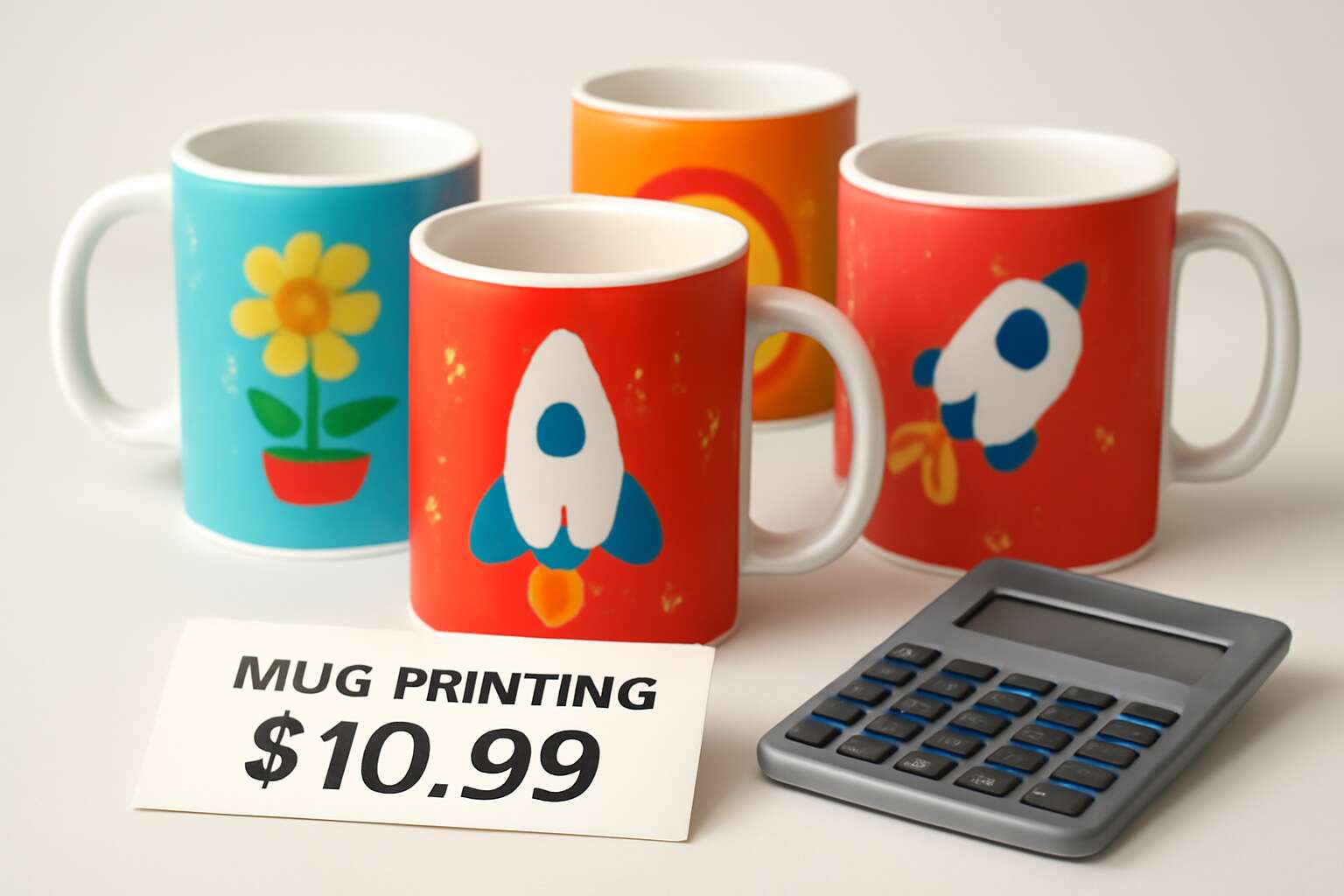
Pricing factors for mug printing
Base mug cost and materials
‘Price is what you pay, value is what you get,’ a line that lands with comic timing in the world of mug printing prices in SA. The base mug cost is the obvious entry point, but the real price drama unfolds with coatings, custom prints, and local shipping quirks that can lift the total higher than a cappuccino in peak season.
- Base mug cost and supplier variability across South Africa, including VAT expectations.
- Materials and coatings such as ceramic type, glaze, and whether the mug is sublimation-ready.
- Print method and setup, including durability, color matching, and one-time setup fees.
In SA, VAT and import duties mingle with bulk-order discounts to shape the final cost. Lead times, MOQs, and local freight all influence budgeting, reminding buyers that mug printing prices aren’t fixed but negotiable with the right supplier.
Printing method impact on price
Price is the melody; finish is the harmony. As one SA printer likes to quip, ‘mug printing prices are a story told by glaze.’ In the SA market, the base figure is merely the overture—the real price climbs with coatings, print tech, and the quirks of local freight.
Consider these factors that sculpt the final bill, often more than the mug itself.
- Print method (sublimation vs. UV) and one-time setup
- Color fidelity, durability, and wear resistance
- Lead times and minimum order quantities (MOQs)
All of this shapes mug printing prices in SA.
VAT, import duties, and bulk discounts mingle; the price is negotiable with the right supplier. The trick is clarity of expectations and a shared timeline—for the story your mug tells, the price will respond in kind. Ultimately, pricing hinges on strategy as much as style!
Volume discounts and MOQs
‘Price is a river,’ a SA printer told me, and the current bends at MOQs and discounts. Volume has a voice here, shaping the final bill as the glaze does.
MOQs set the baseline; in SA, many suppliers require minimums to justify setup and ink. Small tests raise per-unit costs, while bigger runs spread fixed costs.
- MOQs affect setup costs and planning.
- Volume discounts tier with quantity and sometimes color counts.
- Longer lead times can unlock better pricing or reduce rush fees.
Understand mug printing prices by asking for clear timelines and terms. The final figure reflects strategy as much as style, and tells the story your customers will keep.
Artwork and setup fees
Pricing for mug printing prices breathes and bleeds like ink in a midnight corridor. In South Africa, the art that graces the mug dictates the cost of entry: artwork readiness, clean vector lines, embedded fonts, and a trustworthy proof. A single stray pixel or an unconverted color can widen the shadow over the final bill, even before glaze meets the mug.
Artwork and setup fees are the hinge on which the door to production swings. To glimpse their size, consider the following factors!
- Artwork file readiness (vector format, embedded fonts)
- Color count and separation requirements
- Proofing and approval steps
Turnaround time and rush fees
Clockhands in South Africa’s mug printing world move fast: 28% of orders incur rush fees to hit tight deadlines. Turnaround time isn’t merely a countdown; it’s a shadow that can stretch or shrink mug printing prices. When speed is non-negotiable, the numbers keep time with the clock.
Turnaround time and rush fees hinge on a handful of quiet variables: production queue depth, batch size, and the calendar—holidays, weekends, and courier windows. A standard window keeps costs calmer; compressing the schedule nudges prices upward. The forces at play can be summarized as:
- Standard turnaround windows
- Rush fee structures
- Public holidays and courier constraints
Ultimately, the tempo of demand ghosts its way into mug printing prices, making every order a pulse in the workshop’s heart.
Price ranges by mug type
Standard ceramic mugs price range
Across South Africa, branded mugs carry a quiet magic that turns a coffee break into a memory. For standard ceramic mugs, mug printing prices typically hover in a friendly band of roughly R25 to R60 per mug at common order sizes, with wider gaps for tiny runs or larger campaigns.
- One-color, simple glaze: about R25–R35
- Two-color or multi-panel designs: about R35–R50
- Full-wrap, high-resolution imagery: about R45–R60
Design storytelling nudges the price as softly as a brushstroke—bold lines, gradients, or a tiled collage alter the final tag without breaking the spell. When you commit to bigger volumes, the numbers drift downward, revealing the charm of bulk without sacrificing character.
Travel mugs and specialty mugs pricing
Travel mugs carry more than heat; they carry momentum. In South Africa, brands report a 30% lift in recall when mugs travel from desk to client, turning a break into a memory. “A well-placed imprint is a conversation,” notes a Cape Town designer, and the right mug can carry a campaign with quiet grace.
Travel mug pricing follows a simple ladder, shaped by color and wrap.
- Single-color or simple text/logo: R60–R90
- Two-color or small multi-panel designs: R85–R120
- Full-wrap, high-detail imagery: R120–R180
Specialty mugs pricing widens the field: enamel, color-change, and novelty shapes push the baseline higher, with thermochromic finishes ranging roughly R140–R230, enamel hybrids R110–R190, and bespoke shapes R130–R210. In the realm of mug printing prices, specialty pieces push the ceiling.
Premium finishes and limited editions
South Africa loves a mug that travels. In SA, brands report a 30% lift in recall when mugs move from desk to client, transforming a routine break into a memory. “A well-placed imprint is a conversation,” a Cape Town designer notes, and the right mug can carry a campaign with quiet grace.
Price ranges by mug type rise with premium finishes and limited editions. I’ve watched a simple mug become a premium statement; finishes like thermochromic, metallics, or enamel glazes lift the price tier, while limited editions with artist collaborations push the ceiling even higher.
- Premium finishes: thermochromic, metallic, enamel glazes
- Limited editions: artist collaborations and small runs
- Bespoke shapes: unique forms and handles
These shifts are the heartbeat of mug printing prices, turning a utilitarian object into a sought-after collectible.
Bulk order pricing tiers
South Africa logs a 30% recall lift when mugs roam from desk to client, a statistic that makes price lists bite. In a market where a well-placed mug spark a dozen conversations, price ranges by mug type show a gentle curve from everyday ware to collectables. Bulk order pricing tiers are the quiet negotiator: volume changes the tilt of the bill, not the character of the cup. Typical tiers look like: These shifts shape mug printing prices across tiers.
- 250–499 units: 5% off
- 500–999 units: 12% off
- 1000+ units: 20% off
Choose the finish sparingly, and the base cost climbs, but savings on large runs stay sane. When a standard mug meets a premium glaze, mug printing prices rise with volume and quietly justify the theatre of your next campaign. I’ve watched that dynamic turn quiet meetings into memorable brand moments!
Pricing by printing technology
Sublimation printing costs
Across South Africa’s promo scene, sublimation mugs catch the eye and the wallet alike, and buyers often gravitate toward clear mug printing prices. When graphics stretch edge to edge and colors stay punchy after countless washes, the costs lean on ink flow, heat cycles, and the time the press sits idle between cups. The result is a durable finish and a story that lasts—worth a premium, if the price stays transparent!
Pricing by printing technology is not a single figure; sublimation printing costs can be surprisingly economical at scale. For small runs, the per-mug price climbs with full saturation and intricate photos, while bulk orders pull the price down. In my experience, the sweet spot happens when we balance color depth, turnover, and the willingness to wait a touch longer. That’s why mug printing prices with sublimation hinge on scale.
- Ink and consumables per unit
- Full-bleed vs simple designs
- Equipment depreciation and electricity
Decal and pad printing costs
Decal and pad printing still have a certain frugal charm in South Africa’s mug market, and that charm translates into competitive mug printing prices. For decals, the per-unit cost dips with simple artwork and fewer color changes, but climbs with multiple hues and intricate edge detailing. Pad printing offers reliability for curved surfaces, with costs shaped by plate setup, ink layers, and repeatability across batches. It’s the kind of arithmetic that rewards clarity on the quote, not mystery on the invoice.
In practice, I’ve noticed this nudges the numbers:
- Color count and placement
- Run length and production speed
- Surface curve and mug shape compatibility
- Setup vs consumables and press idle time
When you balance these factors, decal and pad options can fit tighter budgets without sacrificing legibility or grip, keeping the numbers honest in a crowded market.
Direct to mug pricing
“A brilliant mug is a memory that lasts longer than the coffee,” a branding veteran once told me. Direct to mug (DTG) pricing reveals a color-rich truth: no screens or plates, just precise ink on ceramic. Full-color art invites higher ink use and longer cure times, nudging mug printing prices upward with complexity; simple two-color logos stay delightfully lean.
For curved surfaces and brisk turnarounds, DTG shines when artwork remains stable across batches. Setup is light, but each extra hue and gradient adds margin pressure. In the South African market, vibrant branding meets practical budgets, and mug printing prices reflect color depth, image density, and the durability you require.
Full-color wrap printing price considerations
A bold line of color can lift a brand, and in South Africa the impact is tangible: “Full-color wraps aren’t cheap, they’re compelling,” an industry veteran notes. Pricing by printing technology for full-color wrap work hinges on coverage, cure cycles, and the patience of the press. Edge-to-edge art on curved mugs demands precise substrate handling, so expect higher ink density and more time on the line—color has a memory, and it will insist on staying put. In a market where brand depth competes with budget, mug printing prices reflect color fidelity, durability, and batch-to-batch consistency more than the base mug itself.
Think of wrap pricing as a map drawn with color weights. Key levers include:
- Color density and gradients
- Wrap coverage and edge treatments
- Substrate curvature and production speed
- Durability requirements (dishwasher or microwave resistance)
Geographic and supplier price differences
Local vs. international print shops
Geography is not just a backdrop; it’s a driver of mug printing prices. In South Africa, local print shops stay close to deadlines and currency, while distant mills chase scale and savings. A recent survey suggested that 62% of buyers value rapid revisions and dependable support.
When you compare prices, geography becomes a bundle of moving parts. Consider these factors:
- Shipping and handling time
- Import duties and VAT
- Currency exchange fluctuations
- Minimum order quantities and packaging
- Local support, warranty, and rework access
All told, local speed and service can narrow the gap that raw unit prices alone suggest.
For South Africans, the dance between local service and global pricing shapes the craft’s cost as surely as ink on ceramic. Offshore quotes may promise savings, but the full picture includes speed, support, and reliability.
Online print-on-demand pricing
62% of buyers value rapid revisions and dependable support, and that preference matters as much in South Africa as it does anywhere else. Geography isn’t just a backdrop; it’s a price lever. Local shops move with deadlines and familiar currency, while offshore mills chase scale and savings. Online marketplaces reflect this tug-of-war in the numbers you see on a quote, not just the unit cost today!
Online print-on-demand pricing for mugs is a bundle of moving parts. Factor in delivery windows, local service levels, and the risk of delays that ripple through production. When you’re evaluating suppliers, the relationship matters as much as the rate, because on-time delivery and easy rework access can smooth out higher base prices. Understanding mug printing prices means looking beyond the upfront quote to speed, support, and reliability.
Seasonal pricing and promotions
Geography is a price lever in South Africa. Local shops chase tight deadlines in rand, while offshore mills chase scale and lower unit costs. The balance shows up as delivery windows and service levels ripple through quotes, not just the tag on the page. That’s a lever you feel in every bid, as if a phantom shifts the line item!
- Early-bird promotions tied to lead times
- Off-peak production slots when capacity is idle
- Holiday bundles that pair prints with accessories
Seasonal pricing and promotions can tilt the math without changing core rates. Look for those options; they can trim mug printing prices when timing aligns with capacity and courier schedules.
Across the landscape, buyers in SA weigh transport quirks, customs, and currency swings—nudging the final figure without changing the artwork or printing method.
Taxes, shipping, and additional charges
Geography wields a peculiar influence on mug printing prices in South Africa. Local shops chase rand-based bids while offshore mills chase scale; the price ladder is defined by delivery windows and service levels more than the tag on the page. “Shipping is the quiet taxman,” a procurement director once quipped, reminding us that distance and logistics tilt mug printing prices even when artwork stays fixed.
- Value-added tax (VAT) on goods and services
- Courier and fuel surcharges
- Customs duties for imported materials (where relevant)
- Remote-area and handling fees
- Import clearance and admin charges
Taxes, shipping, and additional charges are the hidden decorators of the final figure, subtly nudging mug printing prices without altering the artwork or method. This geography-aware calculus helps explain why quotes from similar shops can diverge so dramatically across SA.
Strategies to estimate and control mug printing costs
Getting accurate quotes and proofs
Across South Africa, mug orders often creep beyond the initial budget. A firm grip on mug printing prices starts with precise quotes and clear proofs that catch errors before ink hits ceramic. I’ve found that upfront clarity saves time and money!
Here are practical steps to estimate and control costs:
- Ask for an itemized quote that shows unit costs, proofs, and any revision charges.
- Request a digital proof to confirm color and wrap before production.
- Ask for a clear breakdown of any extra charges to compare quotes accurately.
When quotes align with proofs, prices stay transparent, even as colors and volumes change.
Comparing quotes effectively
“Clarity is the coin of the craft,” a veteran printer often whispers. Across South Africa, mug printing prices are controlled long before the first splash of color, with sharp quotes and disciplined expectations. A careful buyer builds a baseline by mapping base unit costs, proofs, and potential revision charges—the ink reveals where the price hides.
Here are strategies to estimate and steady the budget without draining margins:
- Compare like-for-like quotes that include shipping, handling, and any hidden fees—apple to apple, always.
- Demand a digital visualization to lock color and wrap pre-production, reducing rework later.
- Ask for an explicit cost schedule showing a ceiling on revisions and surcharges.
- Negotiate with a single point of contact and staged approvals to avoid scope creep.
When quotes align with proofs, mug printing prices stay transparent even as colors and volumes shift across the market—the ink seems to whisper, guiding decisions with uncanny clarity.
Cost-saving tips for small businesses
In South Africa’s bustling storefronts, a single line item can summon confidence or chaos. A veteran printer once whispered, “Clarity is the ink of the craft,” and the lesson sticks like dried resin. When you look at mug printing prices, the numbers become a compass that guides every decision before the first splash of color.
We drift along a coast of numbers, letting the cost wind carry us. A single mug style, a restrained palette, and a shared language between designer and supplier become tides that keep the price from turning into a storm. Hidden fees retreat, margins stay visible, and the market’s shifts feel almost navigable.
In the end, the partnership becomes a tale of fiscal storytelling—local voices, predictable rhythms, and a budget that breathes rather than buckles under change. The right collaboration turns a tense quote into a quiet map toward solid margins and reliable delivery.
Choosing the right quantity to optimize price
In choosing strategies around quantity, you feel the pulse of your brand under the South African sun. Choosing the right quantity to optimize price reframes mug printing prices as a living conversation, not a single invoice left on a desk. The aim is a steady rhythm that honors customer expectations and the realities of production. Clarity here becomes a compass through color decisions and the cadence of order arrivals.
Quantity is a narrative you shape with suppliers, not a debt you chase alone. Different moods of demand, from launches to lull periods, create a spectrum of plausible unit counts that keep margins visible.
- Forecast demand across campaigns to gauge plausible unit counts
- Value setup fees when amortized over the estimated lifetime of the campaign
- Assess inventory risk and reorder cadence to avoid overhangs
Ultimately, the numbers bend toward collaboration—local printers, honest proofs, and shared expectations. The right quantity turns pricing into a living map, guiding you through seasonal shifts and customer appetite with a human measure of risk and reward.
Allocating design costs within budgets
Across South Africa, budget drift haunts every mug project—one design choice can swing the Rand by more than you expect. The strategy: treat design as an asset, not a bolt-on cost. Allocate design costs within the campaign budget, amortize proofs across runs, and see revisions as shared investments that pay back with smoother approvals and fewer rework cycles.
Aligning mug printing prices with your art strategy helps you balance quality and cash flow. Integrate design fees into the overall forecast so rush proofs don’t derail margins. The result is a disciplined conversation with local printers, a cadence of proofs, and a steadier path through seasonal demand across SA.




0 Comments